Just Buy Them
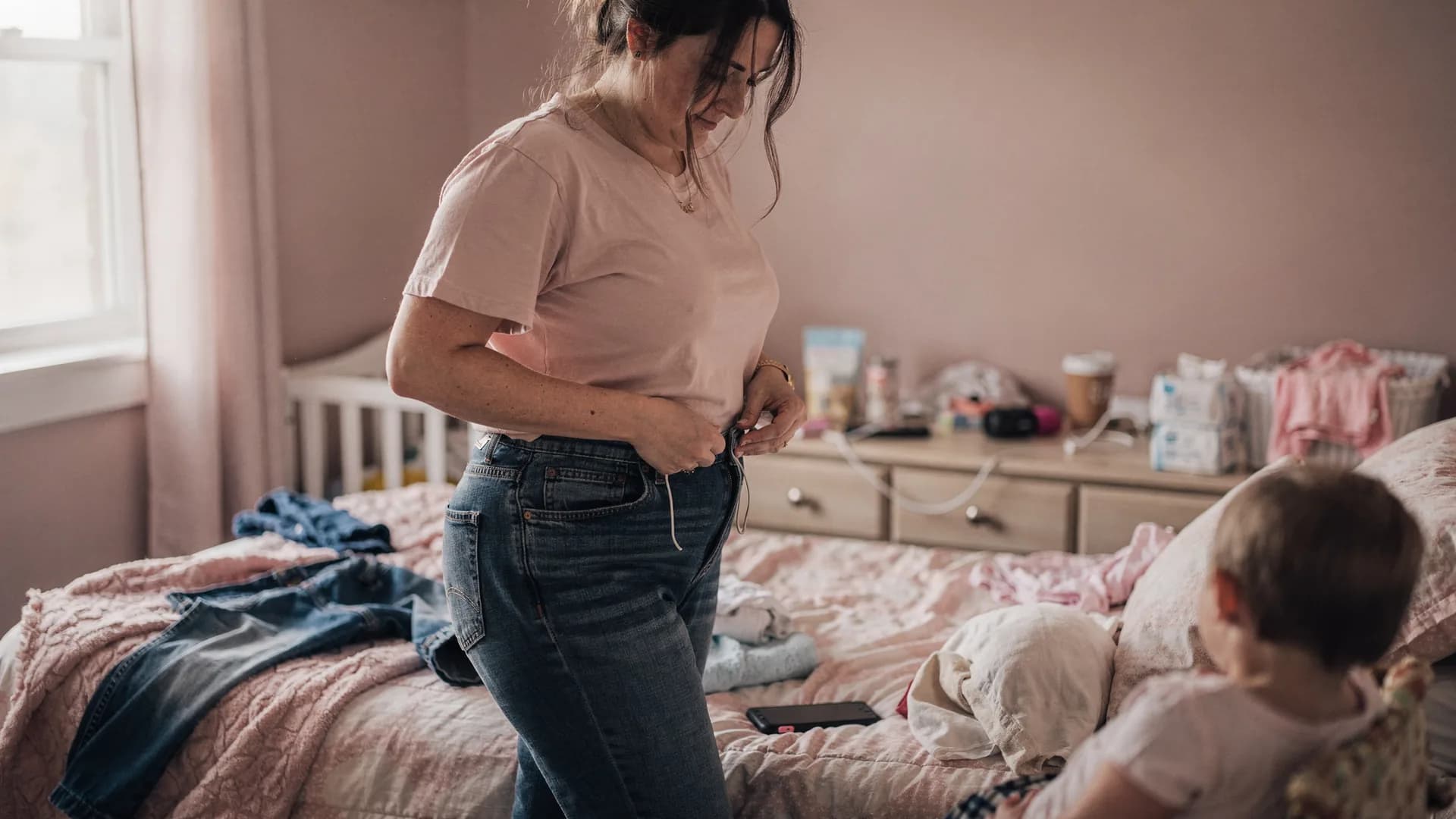
Buy the jeans. The ones that fit the body you are actually wearing today — that button without a fight, that let you sit down and pick up a baby and breathe out. Buy them in the size that is on the tag, and then, if it helps, cut the tag out with scissors and never think about the number again.
I know what the resistance sounds like, because I have said it. Buying the bigger size feels like agreeing to stay this way. It feels like giving up on the smaller pair folded in the drawer, the ones you are keeping as a promise and a punishment. So you go another week pinched and miserable in denim that no longer knows your body, all to avoid a number on a label.
But the number on a tag is not a biography. It is a manufacturer's rough guess, and it varies wildly between two pairs on the same rack. You have handed a piece of stitched-in cardstock the power to ruin your Tuesday, and it does not deserve that job.
What Bad Jeans Actually Cost You
Consider the real price of jeans that do not fit. They dig a red line into a belly that is still healing. They announce themselves all day — a pinch when you bend, a seam when you sit, a waistband you tug at in every photo. They turn getting dressed into a negotiation you lose before breakfast.
Worse, they keep a running argument going in your head. Every hour they remind you that you are the wrong size for your own clothes, which is exactly backwards. The clothes are the wrong size for you. Denim is supposed to be infrastructure — breathable, reliable, forgettable. When you have to think about your jeans all day, the jeans have failed at the one thing jeans are for.
That constant low-grade cross-examination is the same one a whole closet can start running, the feeling that nothing you own quite belongs to you anymore. The fix is not to shrink back into the clothes. The fix is to own clothes that fit.
And there is a body cost on top of the mood cost, especially soon after birth. A waistband pressing into a healing core, a C-section site, a belly still doing the slow work of coming back together — that is not a minor discomfort to power through. Clothing that fights your recovery is working against the one project that actually matters right now.
A number on a tag is not a biography.
How to Buy for the Body Present
Go shopping the way you would help a friend, not the way you would sentence a defendant. Take a range of sizes into the room and try the bigger ones first, so you are choosing up into comfort instead of failing down into it. Whichever pair lets you forget you are wearing jeans is the winner. That is the whole test.
Ignore the number entirely if you can. Some people cut every tag out the day the jeans come home; some size up on purpose and never look. Both are legitimate. The tag is a factory's shorthand, not a fact about you, and you are allowed to sever the connection between it and your self-worth with actual scissors.
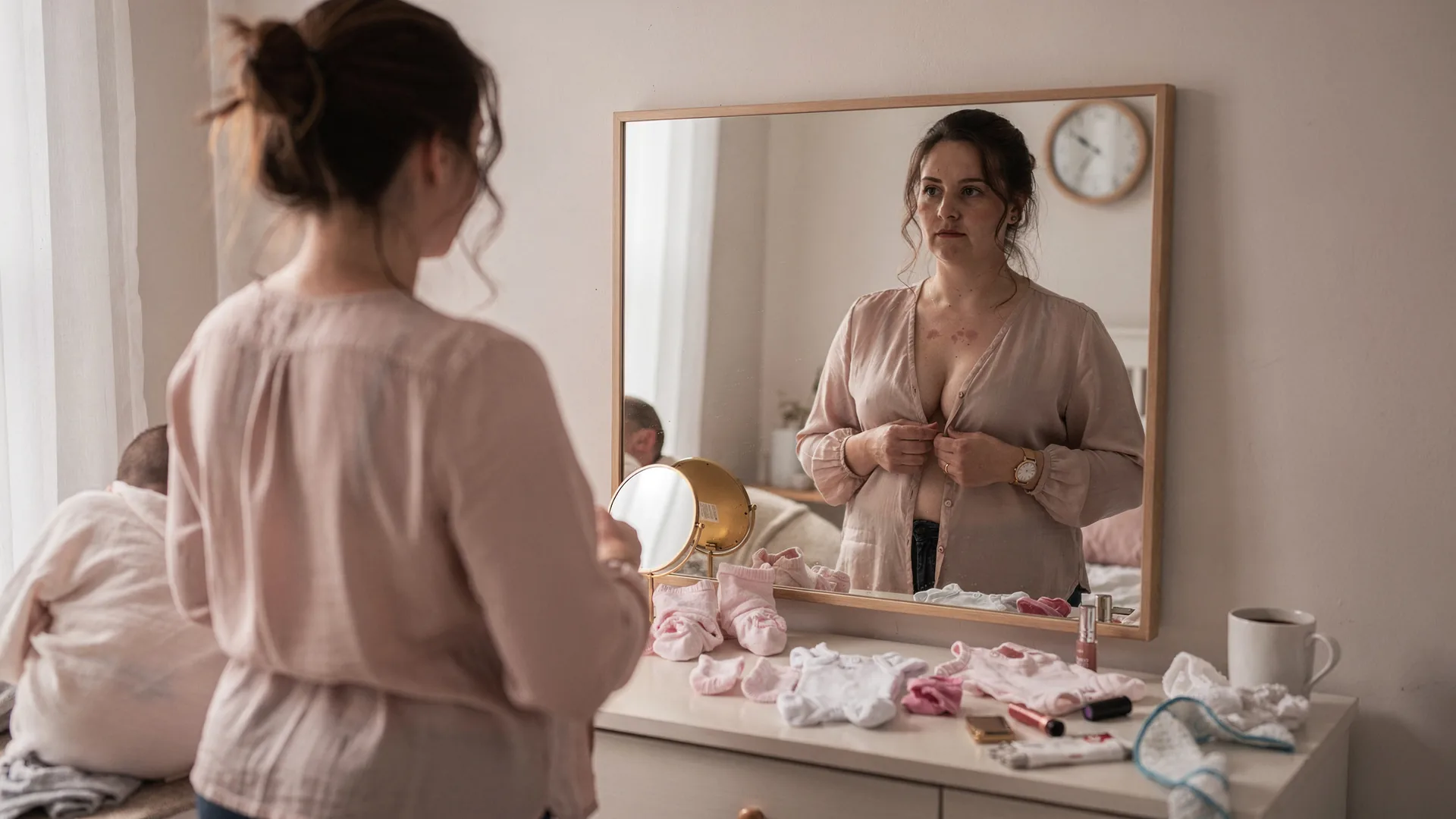
And notice what happens to your day when the jeans just work. The waistband disappears. The mirror gets quieter. You reach for that pair first because they are the ones that let you live in them — proof that getting dressed can stop being a fight and start being a tiny act of return.
The Right Size Is Not a Surrender
The smaller jeans in the drawer are not a goal and not a moral test. If keeping them genuinely does not sting, keep them. If they sit there every morning taking a free shot at your mood, they are not motivation — they are a splinter, and you can let them go without letting yourself down.
Buying denim that fits is not you giving up on your body. It is you supplying your body with working equipment. A firefighter does not wear boots two sizes too small to stay motivated. Neither should you spend your one wild postpartum year pinched at the hip to appease a number.
So: buy the jeans that fit the body you have. Cut the tag. Sit down comfortably. Pick up the baby. The right size is not a surrender — it is breathable infrastructure for the life you are actually living, and that life deserves pants that let it breathe. If some deeper part of the resistance is really about the body underneath, that is its own gentle work, the kind that starts with knowing your body is not a before photo waiting to be corrected.