The Uniform of Survival
For eleven days straight you wore the same soft gray leggings and the nursing tank with the stain on the left shoulder, and there was a kind of mercy in it. No decisions. No zippers. A uniform for the emergency of new motherhood, when the goal each morning is simply to keep two people alive until dark. Nobody should feel bad about the survival uniform. It does its job.
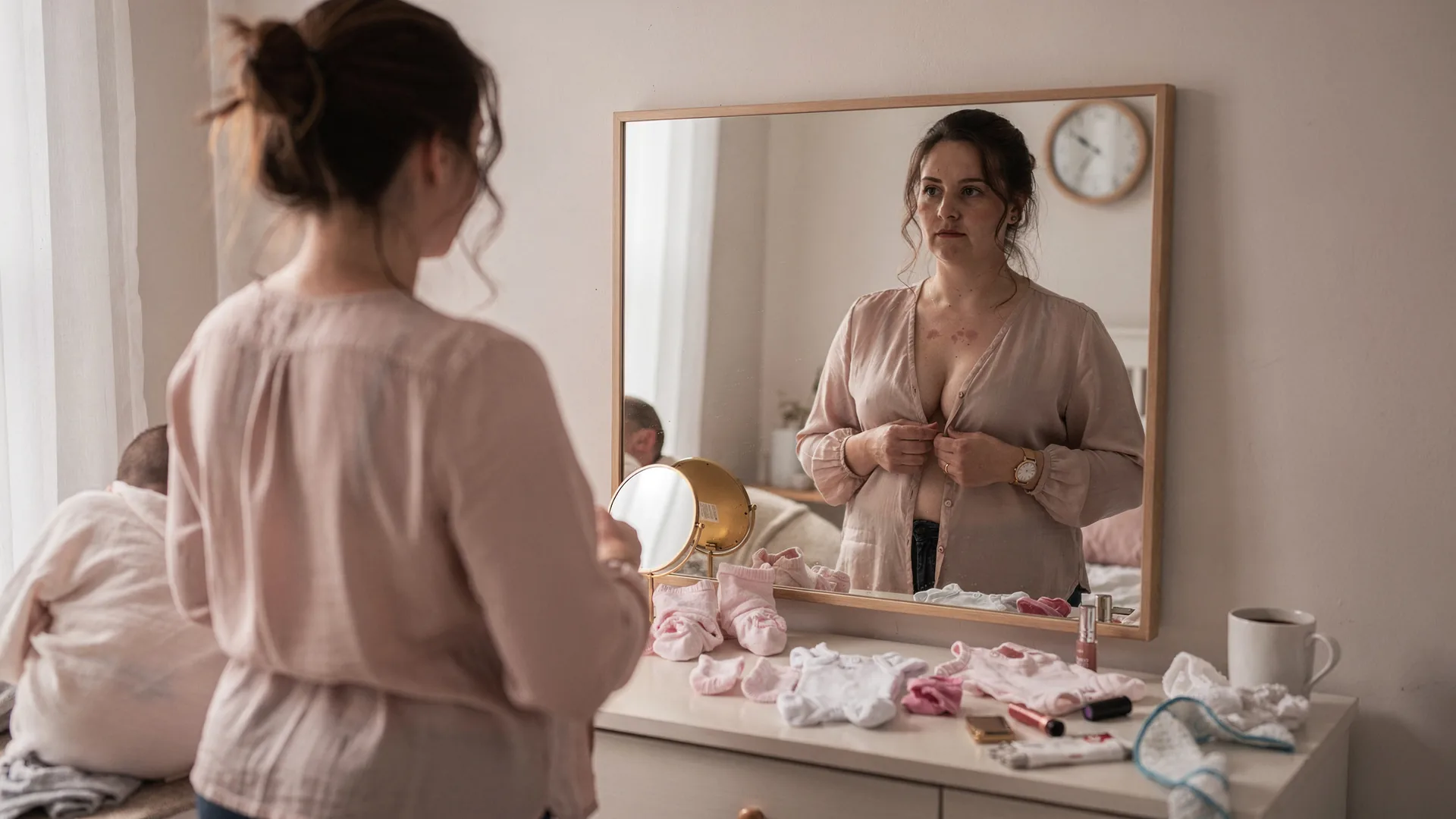
But there comes a morning — you will know it when it arrives — when the uniform stops feeling like mercy and starts feeling like disappearance. You catch yourself in a window and cannot quite locate the person in the reflection. Not because you look bad, but because you look like a function. A feeding station. A pair of hands. Not a woman with a self.
That is the morning to reach, gently, for something else. Not because the world is owed your polish — it is not — but because fabric can occasionally do something almost magic: remind you that you exist, separate from the tasks, a person who still has preferences.
Fabric as a Message to Yourself
Getting dressed is not only a message to the world. Most days no one but the baby will see you, and the baby has no notes on your outfit. The audience that matters is you, catching yourself in the hallway mirror. Clothes are one of the few languages you can speak to yourself before you have the energy for anything else.
So the question is not is this impressive but does this feel like me. The soft dress that skims instead of squeezes. The sweater in the color you always reach for. The earrings that take four seconds and change your whole face. These are not vanity. They are recognition — you, pointing at yourself and saying, still in here.
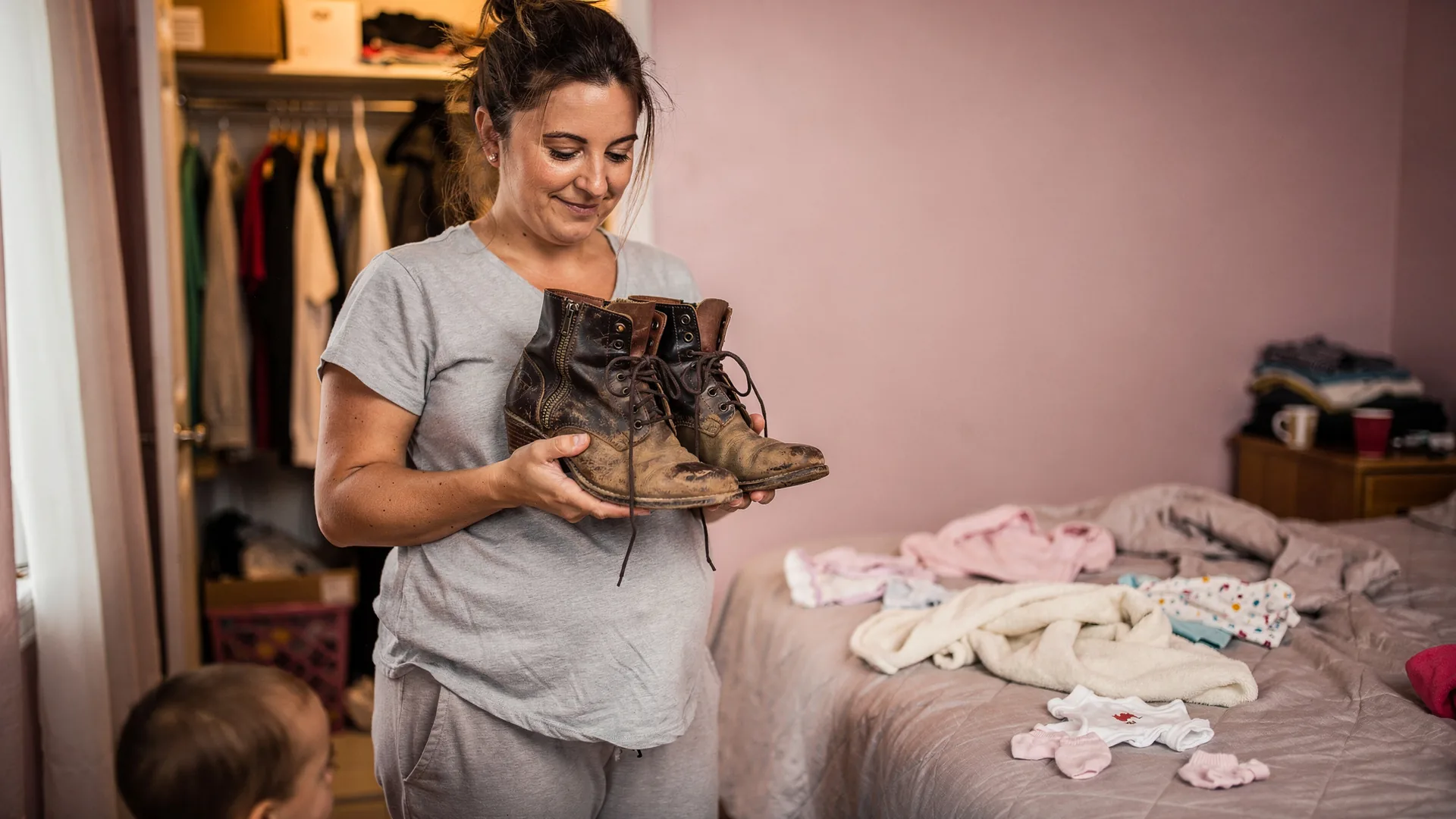
Some days that message is loud and some days it is a whisper, and both count. On a hard morning it might just be a real shirt instead of the tank. On a better one it might be the whole outfit that used to be yours before the baby rearranged the furniture of your life. The dose is up to you.
Style does not have to be performance. It can be recognition.
Lowering the Bar Until It Is Reachable
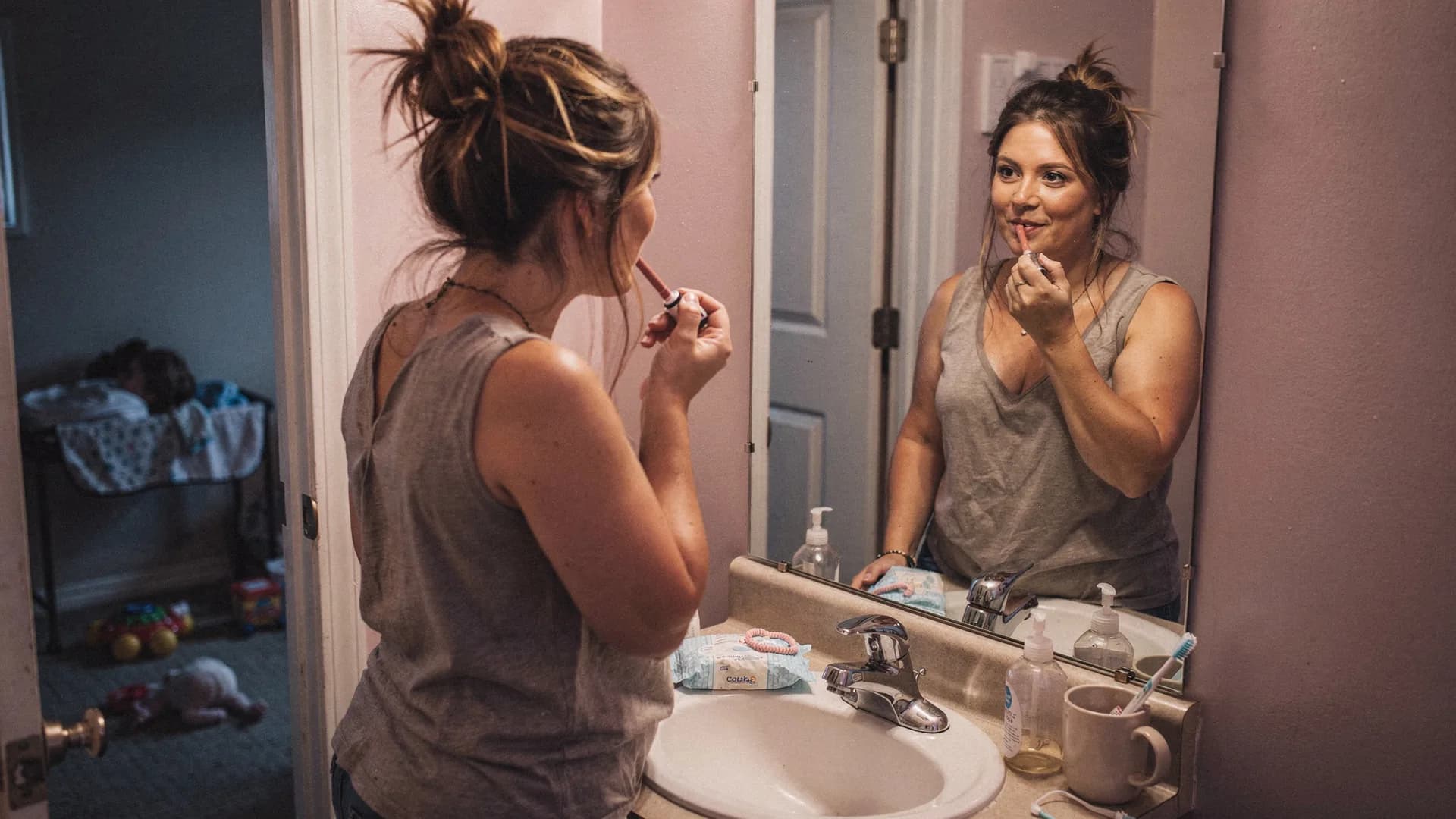
The trap is thinking getting dressed has to be a full transformation or it does not count. It does not. Start absurdly small — small enough that a woman on four hours of sleep can actually do it. One thing that is not the uniform. A scarf. A pair of real pants. Lipstick and nothing else, if that is the reachable rung today.
In fact, a swipe of color is one of the highest-leverage moves available, out of all proportion to the effort — the whole case for it is in putting on the lipstick if it helps you remember. It asks almost nothing and hands back a flash of the person you were before the fog.
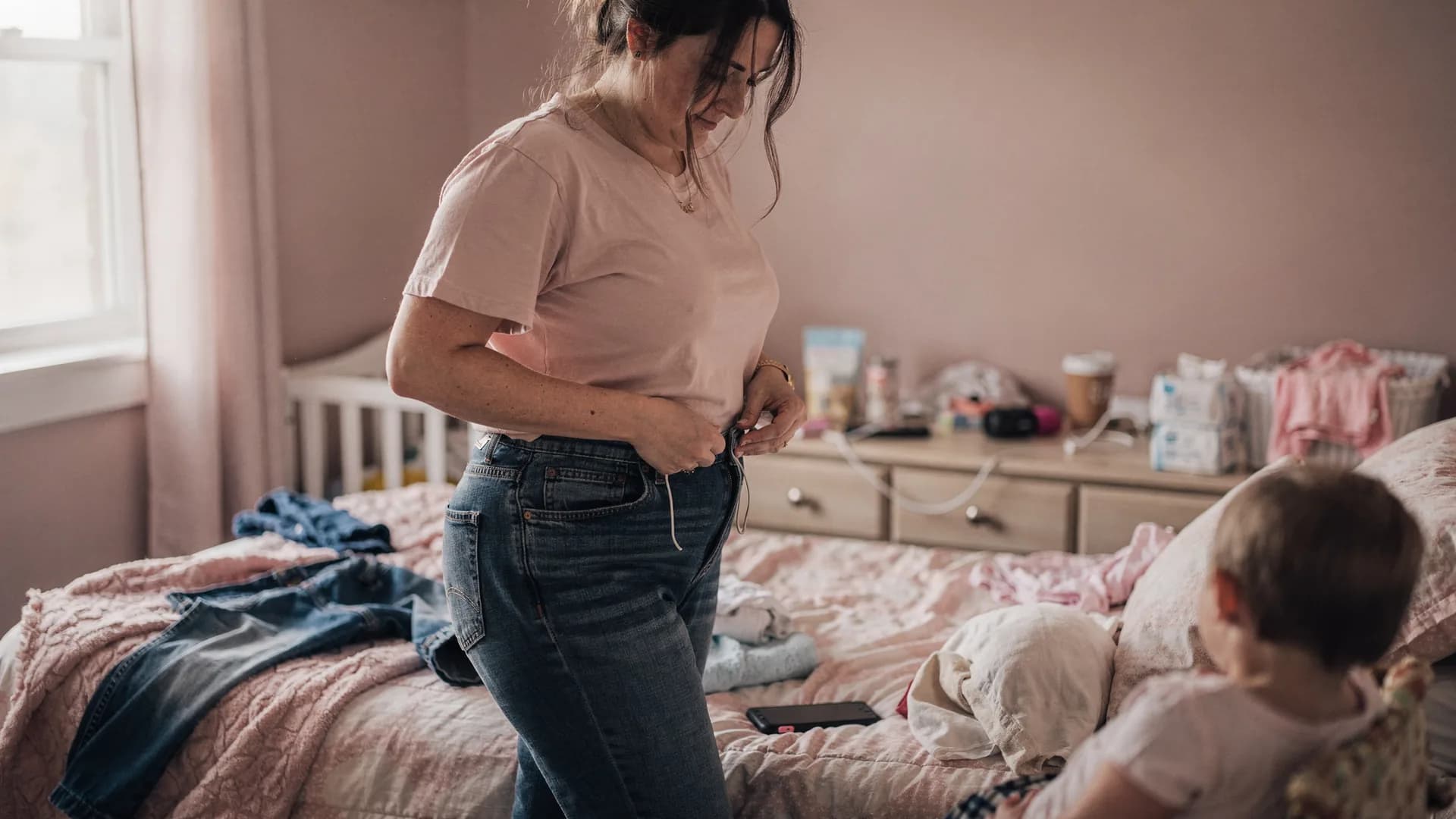
And if even the jeans are the obstacle — if the clothes themselves have started to feel like an accusation — the fix is not to try harder. It is to own clothes that fit, which is the entire quiet argument for buying the jeans that fit the body you have. You cannot return to yourself in pants that fight you.
A Door Back to a Person
None of this is about performing wellness or pretending you are fine. You can get dressed and still be exhausted, still be sad, still be counting the hours to the next nap. The outfit is not a claim that everything is good. It is a small door held open to a self that got a little buried under the caretaking.
That self is not gone. She is just under a lot of laundry and love and sleeplessness, and she answers to small signals — a color, a fabric, a reflection that says her name. Getting dressed is one of the cheapest ways to send that signal, and it costs almost nothing on the mornings you can manage it.
There is real research-shaped wisdom, too, in the old idea that clothes change the wearer before they change any observer. Put on the thing you associate with capable, unhurried, like-yourself days, and some quiet part of your nervous system takes the hint. You are not fooling anyone. You are giving yourself a small honest cue that the person who wore this before is still on duty.
Style does not have to be a performance for anyone else. It can be recognition, a tiny act of return to the woman who was here before all this — the one worth going looking for on purpose, the way the woman you were before deserves to be found rather than mourned. Put on the thing. Say hello. She has been waiting.